Pavers
Travertine pavers in Phoenix: cost, heat performance, and honest tradeoffs
What the stone actually costs, where it beats concrete pavers, and where it doesn't.
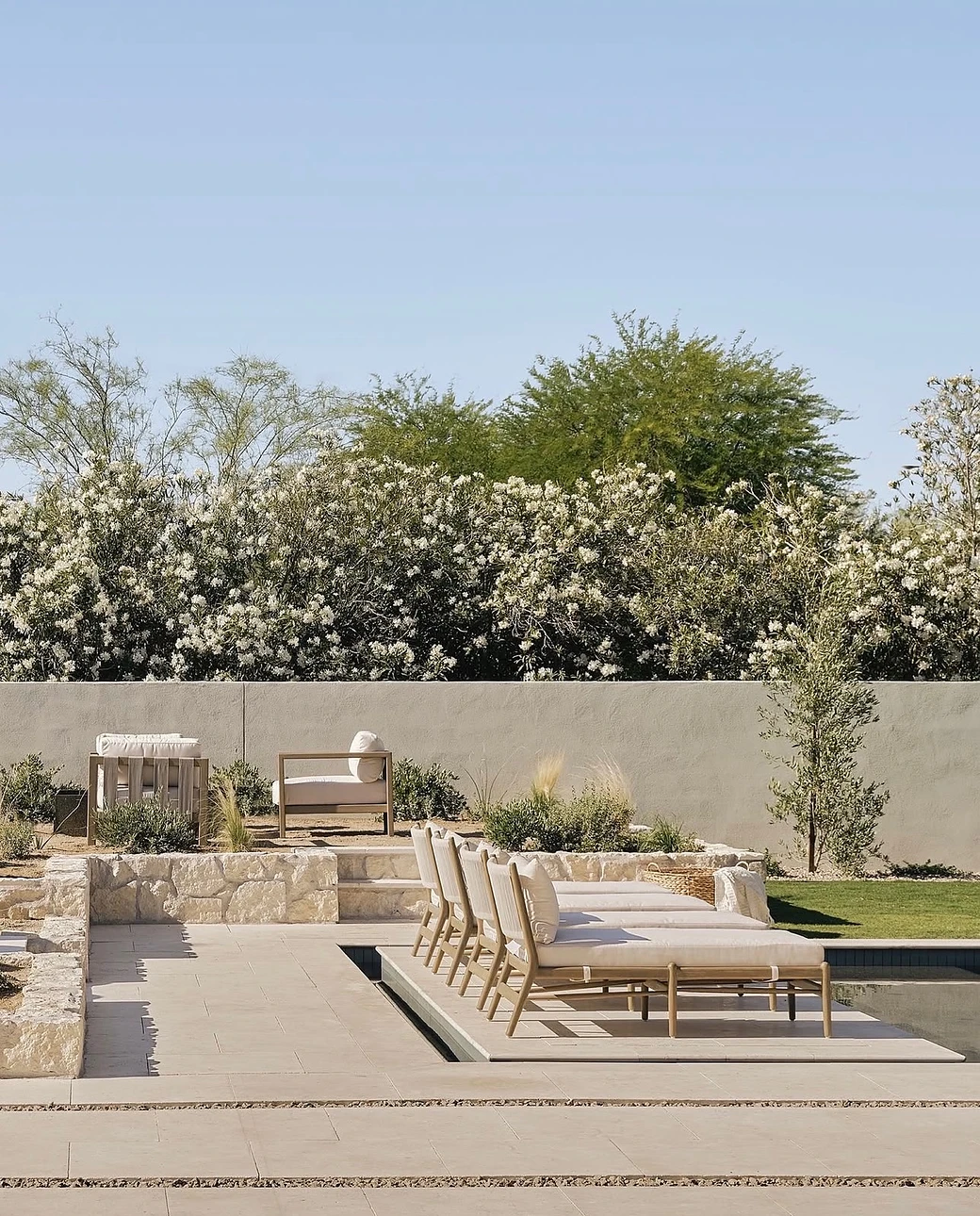
Walk barefoot across a gray concrete pool deck in July and you'll hop. Walk across light travertine in the same sun and you'll stand there. That single difference explains most of the travertine installed in Paradise Valley and North Scottsdale.
Travertine is a natural limestone, quarried and cut into pavers, in tones from ivory to walnut. Here's what it actually costs, where it beats concrete pavers, and where it doesn't.
Why travertine stays cooler underfoot
Angi's 2026 Phoenix paver guide names natural stone like travertine an optimal choice for its "durability and ability to stay cool in extreme heat" (Angi, April 2026). Two properties drive it. The stone's pale natural tones reflect more sunlight than gray or charcoal concrete, so less solar energy ever becomes heat. And travertine is porous and less dense than concrete, so it stores less of the heat it does absorb and sheds it faster once the sun drops.
The honest caveat: color and finish matter more than the material name. Dark walnut travertine in afternoon sun is still hot, and a glossy sealed surface runs hotter than a tumbled one. If barefoot comfort is the goal, choose the lighter tones with a tumbled or honed finish, and stand on a full-size sample in the 3pm sun before you commit to pallets. We'll tell you the same thing at your consultation.
Travertine vs concrete pavers
| Travertine | Concrete pavers | |
|---|---|---|
| Installed cost | $15 to $27 per sq ft (Angi, 2026); $13 to $45 across markets and grades (HomeGuide, 2026) | $8 to $16 per sq ft in Phoenix (Angi, April 2026) |
| Surface heat | Light tones stay markedly cooler in direct sun (Angi, 2026) | Runs hotter, especially in gray and charcoal colors |
| Look | Natural stone variation; ivory, cream, silver, walnut | Manufactured consistency; widest color and format range |
| Color over time | Natural color runs through the full stone | Surface pigment layer can fade under desert UV |
| Slip when wet | Tumbled and honed finishes grip well barefoot | Varies by texture; most textured units grip well |
| Repair | Individual pavers replace, but matching a quarry lot takes effort | Individual pavers replace easily; formats stay in production |
| Maintenance | Sealing recommended in stain-prone and pool areas | Optional sealing; occasional joint sand top-up |
| Character | Reads as estate-grade natural stone | Reads as engineered hardscape |
The pricing gap is real: travertine typically costs roughly double the entry point of concrete pavers once installed. What you're buying for the difference is the cool surface, the full-body natural color, and the material that luxury buyers and appraisers read as stone, not product.
For total project math, including base prep and the line items that move a bid, see our Phoenix paver patio cost guide.
Sealing and maintenance in a desert climate
Travertine is porous. That porosity is part of why it stays cool, and it's also why the stone will drink whatever lands on it. Sealing is how you keep sunscreen, cooking oil, and mineral-heavy pool splash from becoming permanent guests.
For Phoenix installs, the guidance is simple:
- Use a penetrating sealer outdoors, not a film-forming gloss. Gloss coats add slip around water and hold more heat.
- Prioritize sealing around pools, outdoor kitchens, and dining areas. A remote walkway can often go unsealed.
- Expect to reseal every few years depending on exposure and traffic. Professional sealing runs about $1 to $3 per square foot (HomeGuide, 2026).
- Skip the acid. Travertine is a calcium-based stone, and acidic cleaners etch it. Mild soap, water, and a soft brush handle nearly everything.
One desert advantage worth naming: freeze-thaw cycling is the force that destroys unsealed travertine in cold climates, and Phoenix barely has it. Our maintenance conversation here is about stains and pool chemistry, not structural winter damage.
Travertine around the pool
Pool decks are where travertine earns its premium, for the barefoot reason above and because tumbled travertine grips well when wet. State48 designs and installs the decking, coping, and surrounding landscape. When the project includes structural pool construction or remodeling, that work runs through our licensed pool partner while we manage the design as one whole. Details on our pool decking page.
Common Questions
Travertine Paver FAQs
Are travertine pavers more expensive than concrete pavers?
What are the downsides of travertine?
What happens if you don't seal travertine?
Can travertine pavers be installed over an existing concrete slab?
Is travertine considered high end?
Stand on it before you decide
Material selection is easier in person than on a screen. Book a design consultation and we'll walk your space, talk through travertine against the alternatives, and show you the finished design in 3D before anything is ordered.
Request your design consultation